



### Description
MKTXP-Stack is a dockerized monitoring stack for [MKTXP Exporter](https://github.com/akpw/mktxp).
As an out-of-the-box solution, it lets you quickly get up & running with [MKTXP](https://github.com/akpw/mktxp), [Prometheus](https://prometheus.io/), and [Grafana](https://grafana.com/) and have multiple Mikrotik RouterOS devices monitored with least amount of configuration.
While complementary to [MKTXP](https://github.com/akpw/mktxp), this project also adds some extra capabilities such an [centralized Mikrotik log processing](https://github.com/akpw/mktxp-stack#mikrotik-centralized-logging-configuration) based on a preconfigured [syslog-ng](https://www.syslog-ng.com/) / [promtail](https://grafana.com/docs/loki/latest/clients/promtail/) / [Loki](https://grafana.com/docs/loki/latest) stack.
The project offers multiple [docker-compose configurations](https://github.com/akpw/mktxp-stack/blob/main/README.md#alternative-docker-compose-configurations), so only relevant parts of the stack can be loaded.
### Requirements:
[Docker Compose](https://docs.docker.com/compose/install/)
### Install & Getting Started:
- Download the code from this repository and extract it into a directory:
```
wget https://github.com/akpw/mktxp-stack/archive/main.zip
unzip main.zip
cd mktxp-stack-main
```
#### MKTXP Exporter configuration
- Following the steps described in [MKTXP Getting Started](https://github.com/akpw/mktxp#getting-started), let's:\
a) edit the main mktxp config file, adding your Mikrotik device IP address & authentication info to provided sample entry:
```
nano mktxp/mktxp.conf
```
b) if needed, [add a dedicated API user](https://github.com/akpw/mktxp#mikrotik-device-config) from the mktxp config to your RouterOS device:
```
/user group add name=mktxp_group policy=api,read
/user add name=mktxp_user group=mktxp_group password=mktxp_user_password
```
- Run docker-compose:
```
docker-compose -f ./docker-compose-mktxp-stack.yml up -d
```
Now give the containers some time to start up and point your Web browser to [Grafana](http://localhost:3000).\
You should see the default MKTXP Dashboard:\
 #### Mikrotik Centralized Logging configuration
In addition to RouterOS devices monitoring, MKTXP-Stack provides a preconfigured [syslog-ng](https://www.syslog-ng.com/) / [promtail](https://grafana.com/docs/loki/latest/clients/promtail/) / [Loki](https://grafana.com/docs/loki/latest) stack to send logs from your Mikrotik RouterOS devices to a centralized location:
#### Mikrotik Centralized Logging configuration
In addition to RouterOS devices monitoring, MKTXP-Stack provides a preconfigured [syslog-ng](https://www.syslog-ng.com/) / [promtail](https://grafana.com/docs/loki/latest/clients/promtail/) / [Loki](https://grafana.com/docs/loki/latest) stack to send logs from your Mikrotik RouterOS devices to a centralized location:
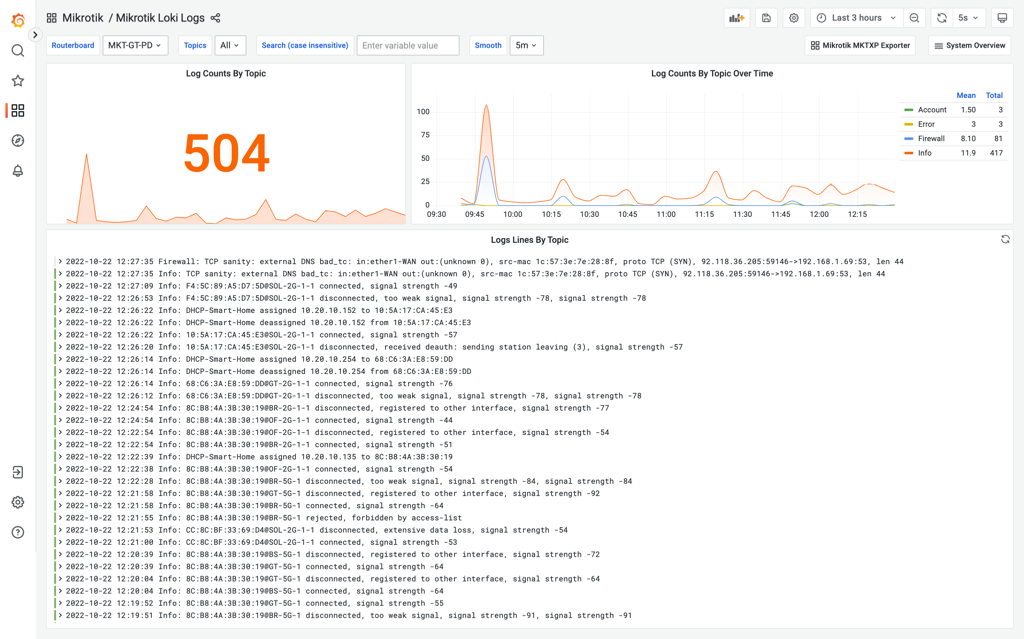 To make it work, we need to configure our Mikrotik devices to send their logs to a specified log server target. Let's first configure the corresponding remote logging action (replace XX.XX.XX.XX with your docker-compose host IP address):
```
/system logging action
set remote bsd-syslog=yes name=remote remote=XX.XX.XX.XX remote-port=514 src-address=0.0.0.0 syslog-facility=local0 syslog-severity=auto target=remote
```
Next, let's modify relevant log topics to use with this remote action:
```
/system logging
set 0 action=remote prefix=:Info
set 1 action=remote prefix=:Error
set 2 action=remote prefix=:Warning
set 3 action=remote prefix=:Critical
add action=remote disabled=no prefix=:Firewall topics=firewall
add action=remote disabled=no prefix=:Account topics=account
add action=remote disabled=no prefix=:Caps topics=caps
add action=remote disabled=no prefix=:Wireles topics=wireless
```
You can extend the list above as needed, following [Mikrotik's description](https://help.mikrotik.com/docs/display/ROS/Log) of the topics used by various RouterOS facilities
Unless you already done it during the previous [MKTXP Exporter configuration](https://github.com/akpw/mktxp-stack#mktxp-exporter-configuration), run docker-compose:
```
docker-compose -f ./docker-compose-mktxp-stack.yml up -d
```
As soon as the containers are up & running, just point your Web browser to included [Grafana dashboards](http://localhost:3000/dashboards) and open the one called "Mikrotik Loki Logs".
## Alternative docker-compose configurations
The project offers multiple docker-compose files to load only relevant parts of the stack as actually required.
To go with full stack, run docker-compose as described above:
```
docker-compose -f ./docker-compose-mktxp-stack.yml up -d
```
In case you need only MKTXP Exporter functionality:
```
docker-compose -f ./docker-compose-mktxp-stack-no-logs.yml up -d
```
If only central logging is needed:
```
docker-compose -f ./docker-compose-mktxp-stack-logs-only.yml up -d
```
To make it work, we need to configure our Mikrotik devices to send their logs to a specified log server target. Let's first configure the corresponding remote logging action (replace XX.XX.XX.XX with your docker-compose host IP address):
```
/system logging action
set remote bsd-syslog=yes name=remote remote=XX.XX.XX.XX remote-port=514 src-address=0.0.0.0 syslog-facility=local0 syslog-severity=auto target=remote
```
Next, let's modify relevant log topics to use with this remote action:
```
/system logging
set 0 action=remote prefix=:Info
set 1 action=remote prefix=:Error
set 2 action=remote prefix=:Warning
set 3 action=remote prefix=:Critical
add action=remote disabled=no prefix=:Firewall topics=firewall
add action=remote disabled=no prefix=:Account topics=account
add action=remote disabled=no prefix=:Caps topics=caps
add action=remote disabled=no prefix=:Wireles topics=wireless
```
You can extend the list above as needed, following [Mikrotik's description](https://help.mikrotik.com/docs/display/ROS/Log) of the topics used by various RouterOS facilities
Unless you already done it during the previous [MKTXP Exporter configuration](https://github.com/akpw/mktxp-stack#mktxp-exporter-configuration), run docker-compose:
```
docker-compose -f ./docker-compose-mktxp-stack.yml up -d
```
As soon as the containers are up & running, just point your Web browser to included [Grafana dashboards](http://localhost:3000/dashboards) and open the one called "Mikrotik Loki Logs".
## Alternative docker-compose configurations
The project offers multiple docker-compose files to load only relevant parts of the stack as actually required.
To go with full stack, run docker-compose as described above:
```
docker-compose -f ./docker-compose-mktxp-stack.yml up -d
```
In case you need only MKTXP Exporter functionality:
```
docker-compose -f ./docker-compose-mktxp-stack-no-logs.yml up -d
```
If only central logging is needed:
```
docker-compose -f ./docker-compose-mktxp-stack-logs-only.yml up -d
```